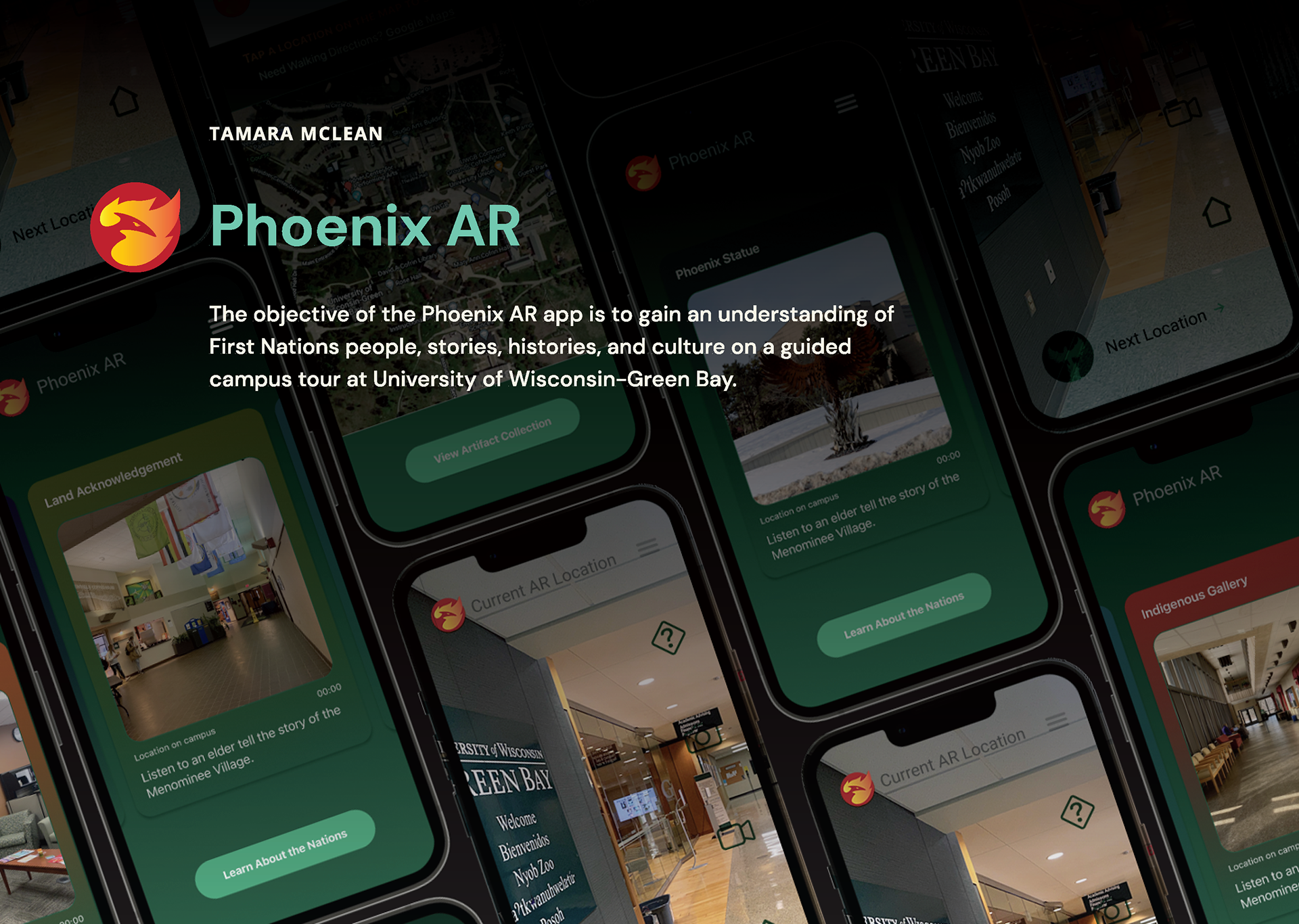
The Challenge
Creating an intuitive augmented reality experience requires balancing complex technology with seamless usability. The challenge for the Phoenix AR project was to design and build a contemporary, highly functional mobile application from the ground up, preparing it for a successful dual-platform launch on both the Apple App Store and Google Play (Android). To achieve this, the product required a rigorous, research-backed foundation to ensure the interface was accessible, engaging, and logically organized for the end-user.
The Strategic Approach
The strategy centered on a highly iterative, research-driven user experience (UX) methodology. Rather than jumping straight into visual design, the process began by bridging the gap between stakeholder business goals and actual user needs. By strictly adhering to UX best practices—including deep research, persona development, and scenario mapping—the team ensured that every design decision was intentional, validated, and focused on optimizing the user's journey through the AR environment.
Key Design Features
Research-Driven Personas & Scenarios: The foundation of the user experience was built on comprehensive research. Detailed persona and scenario documents were compiled and written to clearly define target users, their behaviors, and how they would contextually interact with the AR features in the real world.
Stakeholder & User Integration: To ensure the product hit all necessary benchmarks, the design process actively implemented continuous feedback from both key stakeholders and target users. This dual-pronged research approach aligned business objectives with user expectations.
Iterative Wireframing & Versioning: The UI/UX was developed using contemporary wireframing techniques. By employing strict versioning and iterative design practices, the team was able to rapidly prototype, test, and refine the interface, ensuring a smooth and intuitive final product.
Optimized Information Architecture: The application utilized fundamental content organization strategies and established UX best practices. This meticulous structuring of information ensured that users could easily navigate the app's features and settings without feeling overwhelmed by the AR technology.
The Result
By adhering to a strict, research-first UX methodology, the team successfully translated complex AR technology into an accessible, user-friendly interface. The ultimate result of this iterative design process is a contemporary, polished application: Phoenix AR is now officially live and available for download on both the Apple App Store and Android platforms, delivering a seamless experience validated by both stakeholders and users.
Client: Grant Funding from the Oneida Nation in collaboration with the University of Wisconsin-Green Bay
Industry: Technology / Augmented Reality (AR)
Project: UX/UI Design & Cross-Platform App Launch